
Can You Apply DTF Transfers With an Iron? Yes, Here Is How
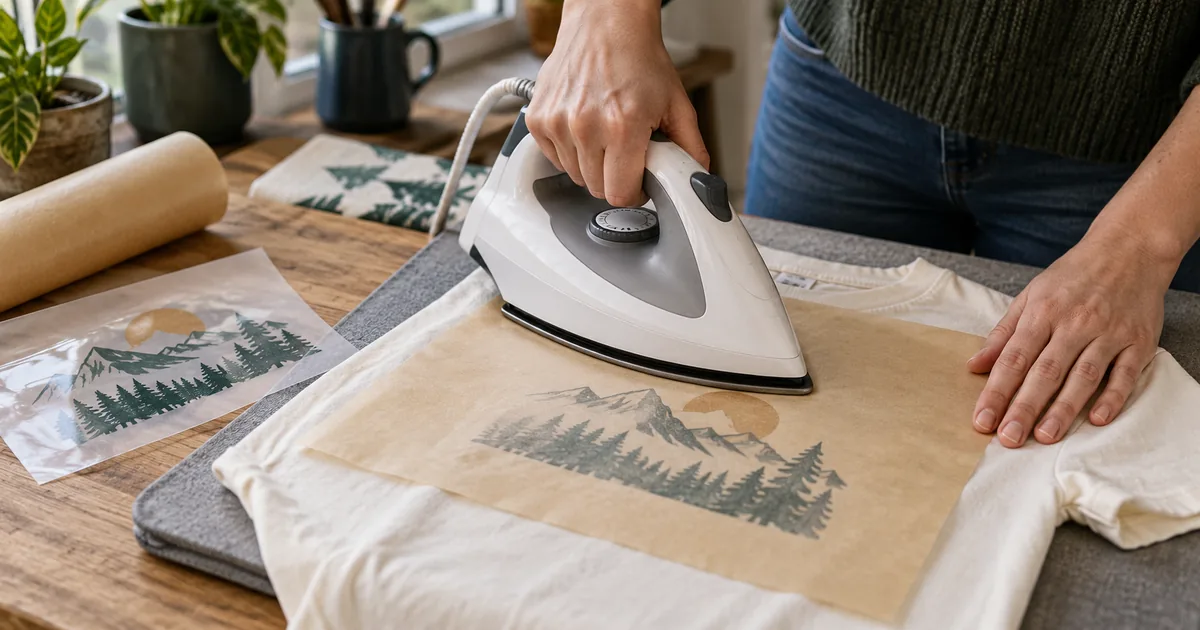
Can you use an iron for DTF transfers? Yes. A household iron can press a DTF transfer onto a shirt, and the result can look good. It takes more care than aheat press, and the print may not last quite as many washes, but for a one-off shirt, a kids craft project or a small test run, an iron works.
The trick is heat, pressure and time. A heat press gives you all three in an even, steady way. An iron gives you heat, but you have to supply the pressure and the patience yourself. This guide walks you through how to iron on DTF transfers step by step, what to avoid, and when it is worth borrowing or buying a real press.
If you are new to the product, our plain English guide on what DTF transfers are covers the basics. For the shop method we use on every order, see how to apply DTF transfers with our shop settings. This post is the iron version of that same process.
Can you use an iron for DTF transfers and get a clean result?
You can, as long as you understand what an iron does not do well. An iron has a small, uneven plate. The holes for steam leave cold spots. Most irons top out at a temperature that is right at the low end of what DTF adhesive needs. And the pressure is only as strong as your arm.
So the fix is simple. Use a hard, flat surface instead of an ironing board. Turn steam off. Press in small overlapping sections. Lean into it with both hands. If you do those four things, iron on DTF transfers come out looking close to a press job.
What you give up is consistency. One shirt may look perfect and the next may have a corner that lifts after a wash. That is why we tell people an iron is fine for a few shirts but not for a team order or anything you plan to sell.
What you need before you start
- A dry iron with no steam, or a steam iron with steam turned off and the water tank empty
- A hard, flat, heat safe surface like a wood cutting board or a table with a folded cotton towel on it, not a padded ironing board
- Parchment paper or a Teflon sheet to cover the transfer
- A clean cotton or cotton blend shirt, washed and fully dry
- Your DTF transfer, trimmed close to the design
- A little patience
The surface matters more than people think. An ironing board is soft, so it soaks up your pressure. A board or table pushes back, and that is what bonds the glue to the fabric.
How to iron on DTF transfers step by step
- Set the iron to its highest cotton setting, no steam. Let it heat for a full five minutes so the plate is hot all the way through.
- Lay the shirt flat on your hard surface. Iron the print area for ten seconds to flatten wrinkles and drive out moisture.
- Place the transfer with the printed side down against the shirt. The film faces up toward you.
- Cover it with parchment paper. Never put the iron right on the film.
- Press hard on one section of the design for 15 to 20 seconds. Do not slide the iron around. Lift it and move to the next section, overlapping a bit. Work until the whole design has had firm, direct heat.
- Go back over the edges and any thin lines for another 10 seconds each. Edges are where transfers fail.
- Let it cool all the way if your film is cold peel, which the order sheet will tell you. Peel the film back slowly and low, like turning a page.
- Lay the parchment back over the print and press again for 10 to 15 seconds. This second press sets the ink into the fabric and gives it a softer, matte look.
If any part of the design stays on the film when you peel, stop. Lay the film back down, cover it, and press that spot again for 15 seconds. Cool and try again.
Iron vs heat press: what is the real difference?
| Factor | Iron | Heat press |
|---|---|---|
| Heat | Uneven, lower | Even, dialed in |
| Pressure | Your arm | Set and locked |
| Time per shirt | Several minutes | Under a minute |
| Wash life | Shorter | Full life |
| Best for | One or two shirts | Any quantity |
The wash life row is the honest one. A press hits the exact numbers in our DTF heat press settings by fabric. An iron gets close on a good day. A print that is slightly under pressed will usually look fine out of the gate and then start to crack or lift at the edges after a handful of washes. Pressing a second time after peel helps a lot.
Common mistakes when ironing DTF
- Using steam. Moisture keeps the glue from bonding. Dry iron only.
- Pressing on an ironing board. It is too soft. Use a board or table.
- Sliding the iron. That smears the design before it bonds. Press, lift, move.
- Peeling hot. Most DTF film is cold peel, and your order sheet will say which yours is. Wait until it is cool to the touch.
- Skipping the second press. It is the step that makes the print last.
- Pressing over seams, buttons or zippers. Anything that lifts the iron off the fabric leaves a gap in the bond.
Which shirts iron best?
Plain cotton and cotton poly blends are the most forgiving with an iron. They take high heat without scorching and the flat weave gives the glue something to grab. Thin, slick polyester can take the print, but it is easy to leave a shiny iron mark on it, so use a lower setting and a longer press. Our post on the best shirts for DTF transfers lists the blanks that press clean, and that list holds true for irons too.
Avoid heavy fleece, waffle knits and anything with a raised texture if you only have an iron. Those fabrics need more pressure than an arm can give.
A note for Clark County crafters
We print DTF transfers and gang sheets in our Vancouver, WA shop and most of our local customers pick up the same week. Plenty of them press at home with an iron for a birthday shirt or a one-time event, and that is a fine use. Grey Pacific Northwest winters also mean more humidity indoors, so give your shirt that extra ten second pre-press to dry it out before the transfer goes down.
If you are not sure a design will iron well, send it over through our quote request and tell us you plan to use an iron. We can suggest a size and layout that gives you the best shot at a clean press.
Ready to order? See our ready to press DTF transfers page for options, what to send us, and how to get a quote.
Questions people ask
What temperature should my iron be for DTF transfers?
Use the highest cotton setting with steam off. Most household irons land somewhere near the range DTF adhesive needs at that setting. Because irons do not show exact numbers, make up for it with firm pressure and a longer press time.
Do I peel the film hot or cold when using an iron?
Cold. Let the shirt cool until the film is comfortable to touch, then peel slowly and low to the fabric. Peeling hot is the fastest way to pull ink off with the film.
Will an ironed DTF transfer survive the washing machine?
Usually yes, if you pressed hard, kept the iron dry and did the second press after peeling. Wash inside out in cold water and skip the dryer when you can. Expect a shorter life than a heat press job, especially at the edges.
Can I iron a DTF transfer onto a hat or a bag?
Hats are hard with an iron because the surface is curved and you cannot get even pressure. Flat canvas tote bags work fine. For hats, a small curved press or having us handle the pressing is the better path.
Ready to try it? Send us the idea and a rough quantity through our contact page and we will send a proof and a price. Ready to press transfers are available for local pickup in Vancouver or shipped anywhere.