
Storefront Sign Guide for New Retail Shops
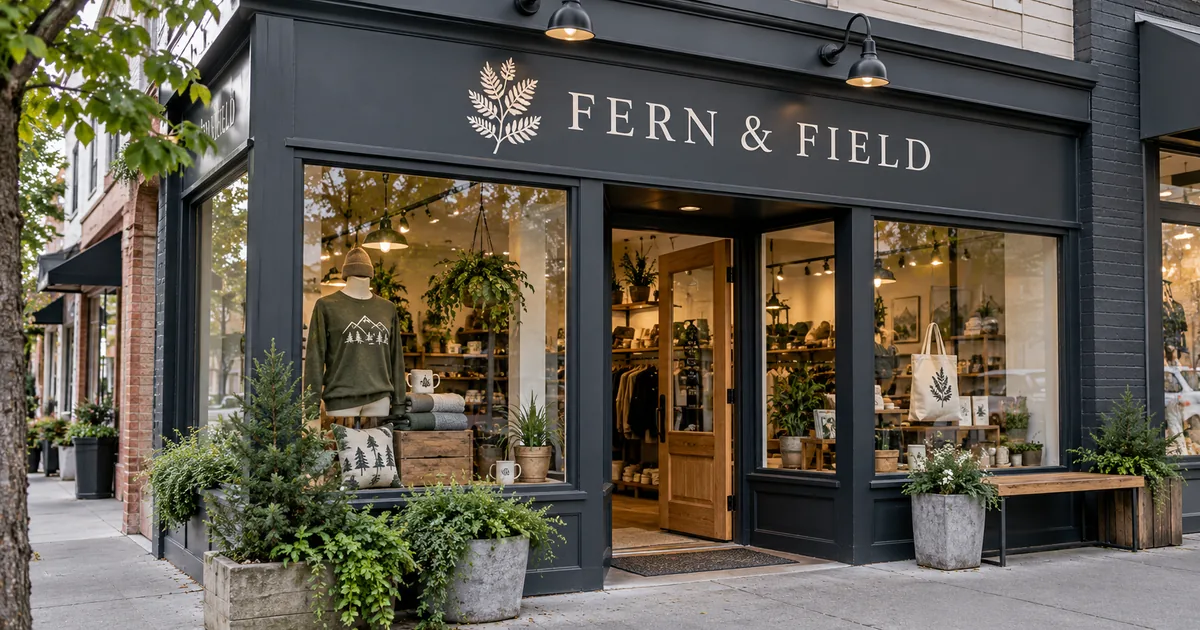
Opening a shop is a long list of decisions, and storefront signs for business are one of the few that people will judge before they ever walk in. A good sign tells a stranger what you sell, that you are open, and that you are the kind of place worth stopping for. A bad one, or no sign at all, makes a busy street walk right past.
The good news is that a new retail shop does not need the biggest or most expensive sign on the block. It needs the right few pieces, in the right order, done well. Most storefronts come together with a main sign over the door, something on the glass, and something at the sidewalk.
This guide walks through those pieces, the materials that hold up in the Pacific Northwest, what each one typically costs, and the permit steps you need to think about before anything goes up in Clark County or the Portland metro. When you are ready, send your logo and storefront photo through our quote request and we will map out a plan.
What storefront signs for business does a new shop actually need?
Think of it as three layers.
- The main sign. This is your name over the door or on the building face. It is read from across the street or from a moving car. It should be big, simple and mostly your logo.
- Window graphics. Hours, phone, what you sell, and a frosted or printed band for privacy. Read from the sidewalk.
- Sidewalk and door signs. An A-frame with a daily special, an open sign, a door decal with your logo. Read from a few feet away.
If budget is tight, do the main sign and the window graphics first. The A-frame can come a month later. Our post on small business signs on a budget ranks what to buy first in more detail.
Main sign options for the front of your business
- Flat panel sign. A printed aluminum composite panel (a thin sheet of plastic sandwiched between two thin aluminum skins) mounted to the wall. Clean, modern, and the most affordable permanent option. We print these in house.
- Dimensional letters. Individual letters cut from acrylic, PVC or metal and stud mounted to the wall. Reads as upscale. Not lit.
- Lightbox or cabinet sign. A metal box with a printed or cut face and lights inside. Common in strip centers. Landlords often require you to reuse an existing cabinet.
- Channel letters. Individual letters that light up from inside. The classic retail look. Highest cost and always needs a permit and an electrician.
- Blade sign. A smaller sign that sticks out from the wall so foot traffic sees it from down the sidewalk. Great add-on for walkable districts like downtown Vancouver or Camas.
Flat panels, window graphics and A-frames are produced right in our Vancouver shop. Lighted signs, channel letters and dimensional metal letters are jobs we quote and manage for you with trusted fabrication partners, so you still get one point of contact and one proof to approve.
How much do storefront business signs cost?
Costs vary a lot by size, material and whether a lift or an electrician is involved. These are broad, typical industry ranges, not our price list. Your quote depends on size, quantity and material.
| Sign type | Typical range | Lit? |
|---|---|---|
| Flat panel | Few hundred to low thousands | No |
| Window graphics | Low hundreds and up | No |
| A-frame | Around a hundred and up | No |
| Dimensional letters | Low to mid thousands | No |
| Cabinet face | Mid hundreds to low thousands | Yes |
| Channel letters | Several thousand and up | Yes |
Installation, permits and electrical work are usually extra. Ask for the full picture when you request a quote so there are no surprises.
What makes cool, modern business signs work?
People ask us for cool business signs and modern business signs all the time, and what they usually mean is clean. The signs that look best from the street share a few habits.
- One idea. Your name, maybe one word about what you do. Not a paragraph.
- Big letters. A rough rule is one inch of letter height for every ten feet of viewing distance. A sign read from a parking lot fifty feet away wants letters at least five inches tall.
- High contrast. Dark on light or light on dark. Thin gold script on a tan wall disappears in grey light.
- Room to breathe. Blank space around the logo makes it read as intentional. Crowded signs read as cheap.
- A matte finish. Glossy panels glare in sun and show streaks in rain. Matte laminate photographs better too.
Business logo signs do not need to be fancy to be good. A simple logo on a well sized matte panel will outclass a busy lit sign most of the time. For more ideas, see our roundup of exterior business sign ideas that work in the Pacific Northwest.
Do I need a permit for a storefront sign in Clark County?
Usually yes for anything attached to the building, and always for anything lit or electrical. The City of Vancouver, Clark County, Camas, Washougal, Battle Ground and the Portland metro cities each have their own sign code. Those codes set limits on sign area, height and lighting. Many strip centers also have landlord rules on top of the city rules.
Window graphics, A-frames and temporary banners are often exempt or have lighter rules, but sidewalk signs still have placement limits. Our guide on building signs, mounting and permits in Clark County goes deeper. Short version: get your lease sign rules and your city code in hand before you fall in love with a design. We can help you read them.
Materials that survive a Vancouver winter
We get months of rain, a few hard freezes, wind off the Columbia and then a bright summer that bakes south facing walls. Signs for the front of a business here need to handle all of it.
- Aluminum composite panels do not rust, warp or soak up water. They are our default for flat signs.
- UV laminate over any printed graphic keeps colors from fading in the summer sun.
- Stainless or coated hardware stops rust streaks down your wall.
- Window film and decals should be rated for outdoor use if they go on the outside of the glass. Inside mount is easier and lasts longer. See window signs and decals for business for the options.
- A-frames should be weighted or have a water fill base. Wind will take a light one down the sidewalk.
A simple opening day sign plan
- Six to eight weeks out: send us a storefront photo, your lease sign rules and your logo. We draft the main sign and start the permit if needed.
- Four weeks out: hang a coming soon banner.
- Two weeks out: install window graphics with hours and what you sell.
- Opening week: main sign goes up and the A-frame hits the sidewalk.
Turnaround on each piece varies, so ask us for current timing when you quote.
Ready to order? See our business signs in Vancouver WA page for options, what to send us, and how to get a quote.
Questions people ask
What is the cheapest permanent storefront sign?
A printed aluminum composite panel with a UV laminate. It is rigid, weatherproof, holds a full color logo and mounts with a few screws or standoffs. It is also the fastest to produce since we print it in house.
How big should the letters on my storefront sign be?
Use the one inch per ten feet rule as a starting point. Measure from where most people will first see the sign, often the far side of the street or the parking lot entrance, and size up from there. Bigger is almost always better.
Can I put my sign up myself?
Window graphics, A-frames and small flat panels are often fine to install yourself. Anything heavy, high, or electrical should go to a licensed installer, and most cities require it for permitted signs. We can include installation in your quote.
Do you make lighted signs?
We quote and manage channel letters through fabrication partners, and we handle the design and proofing so you have one contact. Flat panels, window graphics, banners and A-frames are printed in our shop.
Opening soon? Send us the idea and a rough quantity through our contact page and we will send a proof and a price. A storefront photo and your logo file are all we need to get started.